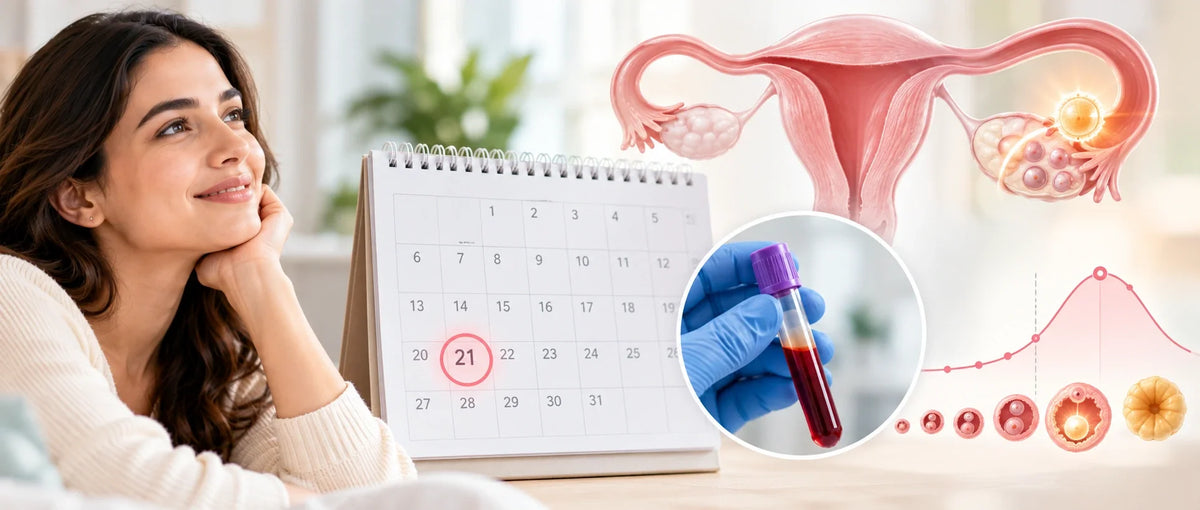

HYCOSY and HSG are both tests that check whether your fallopian tubes are open. HYCOSY uses ultrasound and a contrast fluid. HSG uses X-rays and an iodine based dye. Their accuracy is similar, so the right test depends on your history, local availability and what else needs to be checked.
The World Health Organization (WHO) reviewed the evidence in its infertility guideline. It suggests using either test to assess the tubes in women with infertility and suspected tubal disease. It rates the certainty of the evidence as low.
This article compares the two tests on how they work, accuracy, pain, safety and cost. It also explains why each test is done and what to ask before you book.
You can book a free fertility advisory call to talk through your case. IVF Matters also offers a HYCOSY test with a saline scan in London.
Fallopian Tube Test for Infertility: Who Needs One?
A fallopian tube test for infertility is recommended when a doctor suspects the tubes are blocked or damaged. The tubes carry the egg to the womb and are where sperm meet the egg. If both are blocked, an egg and sperm cannot meet naturally.
Common causes of blocked or scarred tubes include:
-
Pelvic inflammatory disease, often linked to chlamydia or gonorrhoea
-
Endometriosis
-
Previous pelvic or abdominal surgery
-
A past ectopic pregnancy
-
Tubal ligation or a reversal
The WHO guideline names laparoscopy with dye as the reference standard for confirming tubal disease. This is keyhole surgery under general anaesthetic. Because it is invasive and costly, it is not used for routine screening. HSG and HyCoSy are the outpatient alternatives.
Read more in our guide to blocked or scarred fallopian tubes.
HYCOSY vs HSG: What Is the Difference?
The difference between HYCOSY and HSG is the imaging method and the contrast used. Both pass fluid through the womb and tubes using a thin catheter placed in the cervix.
| Feature | HYCOSY | HSG |
|---|---|---|
| Full name | Hysterosalpingo contrast sonography | Hysterosalpingography |
| Imaging | Ultrasound | X-ray |
| Contrast | Fluid or foam that shows on ultrasound | Iodine based dye that shows on X-ray |
| Radiation | None | A small amount |
| Typical length | About 20 minutes | 15 to 20 minutes |
| Where done | Ultrasound room | X-ray department |
| Also shows | Womb and ovaries on the same scan | Womb cavity outline |
| Result | Often given at the end of the scan | Report sent to the referring doctor |
Both are usually scheduled in the first half of the cycle, after bleeding stops and before ovulation. The WHO guideline gives cycle days 6 to 10. Leeds Teaching Hospitals gives days 6 to 12 for HSG. IVF Matters books HYCOSY on days 7 to 12.
Why Is the HSG Test Done?
The HSG test is done to find out whether the fallopian tubes are open and to outline the inside of the womb. Doctors order it for women with infertility and suspected tubal disease. It can also show polyps or fibroids inside the womb.
During HSG, a catheter is placed in the cervix and iodine contrast is gently pushed into the womb. X-ray images follow the dye as it travels through the womb and tubes. If dye spills freely from the ends of the tubes, they are open.
Leeds Teaching Hospitals gives about 15 to 20 minutes for the examination, with around one hour in the department. Cambridge University Hospitals reports radiation exposure of less than 1 mSv and an infection risk of under 1%. See the Leeds HSG leaflet and the Cambridge HSG information.
Why Is HYCOSY Done?
HYCOSY is done to check tube patency without X-rays. It answers the same question as HSG, and the scan also shows the womb and ovaries.
The steps at Leeds Teaching Hospitals are:
-
You empty your bladder and give a urine sample for a pregnancy test.
-
A transvaginal ultrasound scan is done first.
-
A speculum is placed in the vagina.
-
A thin plastic catheter is passed through the cervix, and a small balloon holds it in place.
-
Dye visible on ultrasound is injected and its flow is watched on screen.
The procedure lasts about 20 minutes. The practitioner tells you the result when the test is complete. See the Leeds HyCoSy leaflet.
At IVF Matters, the HYCOSY test is combined with a saline scan of the womb cavity at no extra charge. The report is emailed immediately after the scan, and Dr Irfana Koita reviews it with you on a complimentary call.
HYCOSY Test for Blocked Tubes: What the Result Shows
A HYCOSY test for blocked tubes shows whether contrast flows along the tubes and spills out of the ends. Flow on both sides suggests both tubes are open. Missing flow on one or both sides suggests a blockage.
A blocked result does not always mean permanent damage. Some results need confirming with a second test or laparoscopy before treatment decisions are made. If both tubes are blocked, IVF bypasses the tubes. If a tube is swollen with fluid, called a hydrosalpinx, doctors may advise removing it before IVF.
HSG Test for Blocked Fallopian Tubes: What the Result Shows
An HSG test for blocked fallopian tubes shows a blockage when dye stops moving or does not spill into the pelvis. The images give a permanent record, which another doctor can review.
Leeds Teaching Hospitals notes the test may be incomplete or inconclusive. In that case, a laparoscopy may be recommended. Results are usually sent to the doctor who requested the test, and Leeds states an outpatient appointment follows within six weeks.
HSG Test vs HYCOSY: Accuracy, Pain and Safety
HSG test vs HYCOSY accuracy is very close. The WHO guideline pooled eight studies in which women had both tests and compared them with a reference standard, usually laparoscopy.
| Measure | HYCOSY | HSG |
|---|---|---|
| Sensitivity (finds a true blockage) | 93% (95% CI 79% to 98%) | 92% (95% CI 74% to 98%) |
| Specificity (confirms open tubes) | 89% (95% CI 79% to 94%) | 90% (95% CI 86% to 93%) |
The overlapping ranges show no meaningful difference. The WHO panel rated the overall certainty as low.
Pain. The WHO panel agreed HYCOSY may cause slightly less pain and fewer side effects such as fainting, light bleeding and bloating. The evidence for this was very low certainty. Both tests commonly cause period type cramps. Leeds suggests taking ibuprofen, paracetamol or co-codamol about an hour beforehand.
Radiation. HSG uses a small dose. The WHO panel did not consider this a major concern, though it called for more research on radiation around conception.
Operator skill. The WHO annex cites research that HYCOSY is highly observer dependent and accurate in experienced hands. Ask who performs the scan and how many they do.
Allergy. HSG uses iodine contrast. A reaction is very rare, but you must tell staff about any past reaction to contrast.
Pregnancy outcomes. The WHO review found the effect of each test on pregnancy and birth was uncertain. Neither test was shown to be better.
HYCOSY vs HSG: Which Is Better?
Neither test is better for everyone. The WHO guideline advises choosing by feasibility, availability of trained staff and the potential for allergy.
| Your Situation | Usually Suits |
|---|---|
| You want to avoid radiation | HYCOSY |
| History of reaction to iodine contrast | HYCOSY |
| You want womb and ovary checks on the same scan | HYCOSY |
| Detailed outline of the womb cavity needed | HSG, or HYCOSY with a saline scan |
| You want a permanent image record | HSG |
| Only one test is available near you | Either, with an experienced operator |
At IVF Matters, the HYCOSY with saline scan is £749 at our Harley Street W1G and London City E1 locations as of 22 October 2026. Prices may change, so confirm on the HYCOSY test page. You can also compare other female fertility tests.
How to Prepare: A Checklist
Both tests share the same preparation:
-
Book for the first half of your cycle, after bleeding stops
-
Use contraception from the first day of your period until the test, so you are not pregnant
-
Complete a chlamydia screen if requested
-
Take pain relief about an hour before
-
Tell staff about any contrast allergy
-
Bring a sanitary towel for light spotting afterwards
Leeds states that no rest time is needed after HYCOSY. Contact your GP or NHS 111 if you develop severe pain, discharge or a fever.
Frequently Asked Questions
Do I need an infection screen before the test?
Leeds notes the main concern with HSG is pushing chlamydia or gonorrhoea into the womb, so testing beforehand is advised. IVF Matters asks for a chlamydia report before booking.
What happens if a tube is found blocked?
Your doctor reviews the result with your other tests. Options include a repeat test, laparoscopy, tube surgery or IVF. Fluid filled tubes may need removing before IVF. Our IVF treatment in London page explains the IVF pathway.
Does having a tube test improve my chance of pregnancy?
This has not been shown. The WHO review rated the evidence on pregnancy outcomes as very low certainty, and it found no clear difference between the tests. Their main purpose is diagnosis.
Does a normal result mean I will conceive?
No. It shows the tubes are open. Ovulation, sperm quality and womb health also affect fertility. A progesterone test can help check ovulation.
Should my partner be tested too?
Usually yes. Fertility problems can involve either partner. A semen analysis is a simple first check.
Conclusion
HYCOSY and HSG are close in accuracy. HYCOSY avoids radiation and shows the womb and ovaries, while HSG gives a permanent X-ray record. The WHO guideline supports either test and advises choosing by availability, operator training and allergy risk.
If you are unsure which suits you, book a free fertility advisory call or arrange a private fertility consultation.
Resources
-
World Health Organization: Guideline for the prevention, diagnosis and treatment of infertility
-
Leeds Teaching Hospitals NHS Trust: Hysterosalpingo contrast sonography (HyCoSy)
-
Leeds Teaching Hospitals NHS Trust: Hysterosalpingography (HSG)
-
Cambridge University Hospitals NHS Foundation Trust: Hysterosalpingogram (HSG) information for patients
Explore More